SAVANNA, RAINFOREST & RIVER IN ONE SEAMLESS JOURNEY

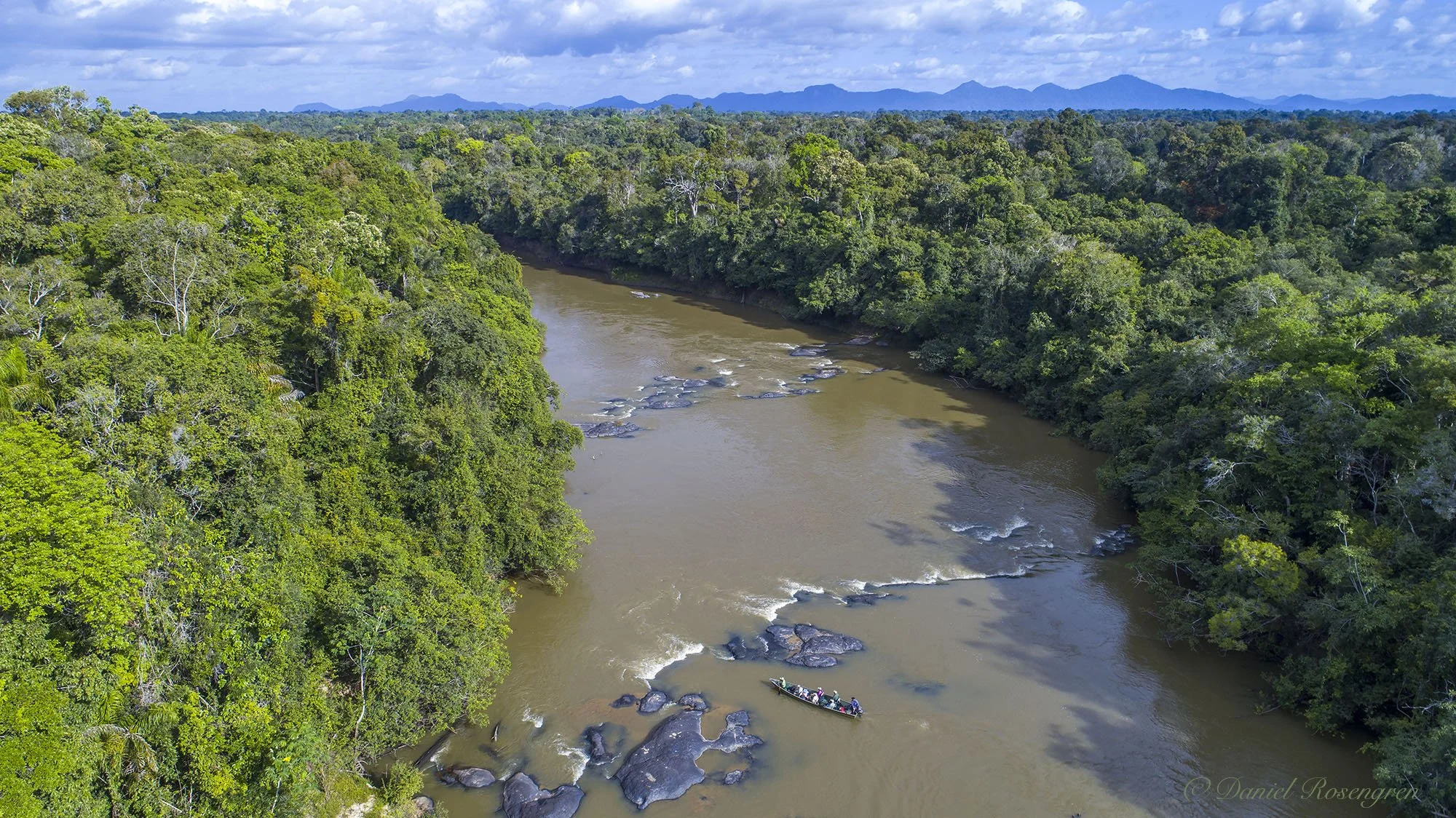
No days lost in transit: Caiman House is the only Rupununi lodge that sits where the savanna meets the river, with pristine rainforest just a boat ride upstream at Mapari Wilderness Camp — so the journey between habitats is a few hours spotting monkeys and arapaima from a boat, not a vehicle transfer. The trip to Mapari begins by walking down the hill from the lodge to the waiting boats. We call it going on SaFoRi: Savanna, Forest, River. Book the full SaFoRi — two nights at Caiman House, three or more at Mapari, and a last night in Yupukari before you fly: here. Or book Caiman House on its own, two nights minimum, here.
A Wild Connection in the neighborhood https://www.facebook.com/awildconnection

SAVANNA

CAIMAN HOUSE ECOLODGE is in the heart of Yupukari Village. Among our savanna and village-based activities are:

EL DORADO

An early morning search for giant anteater and burrowing owls, touring termite mounds via Land Rover. Just outside Yupukari, an ancient portage linked the Rupununi River to the Amazon in the lowlands and wetlands of bygone Lake Parime — the road to El Dorado that Walter Raleigh claimed for Guyana.

AWARIKRU LAKE & FISHING

We’ll take you out paddling for giant waterlilies, bird watching and wildlife-spotting in a dugout canoe. We’ll teach you how to fish, local-style. (HINT: it often starts with knocking on a tree.)

ARTISAN STUDIO

In the village, craftspeople weave, sew, carve, print and make furniture and bags from cowhide. You can watch, or learn if you wish.

You sleep at Caiman House — two nights at the start of a SaFoRi, and one more on your way out.

Neighbor spotted by Ashley Holland, Yupukari-based river guide

FOREST

A few scenic hours by boat from Yupukari, and you’re in the thick of the rainforest, at Mapari Wilderness Camp and its harpy eagle nesting site, 5 species of monkeys, 6 species of cats, 89 bat species, 441 birds… You sleep at Mapari — three nights or more.

Thank you, Helen Lawrence!

Steve Backshall visits the neighborhood…

RIVER

BLACK CAIMAN RESEARCH

Guests accompany our caiman research crew (in dry season) observing capture from a separate boat, and may then assist in data collection. Caiman are weighed, measured, sexed, tagged and released. Depending on the season, caiman nests are also studied, and so are the hatchlings. Yes, little baby caiman. 

CREATURES OF THE NIGHT

Just after darkness settles on the Rupununi River many creatures emerge, such as black caiman, spectacled caiman, tree boas, iguanas, frogs, and many fish species (arawana, piranha…). Sleeping birds (kingfishers, small perching birds), nightjars, potoos, boat-billed herons and other aquatic birds, bats, (harmless) spiders, insects, moths, and more, can be closely approached in way not possible during the hours of light. Less likely, but not rare night sights include possums, tree dwelling rodents, capybara and sleeping monkeys (esp. squirrel monkeys) amongst other mammals. Few nights pass without some unusual offering.

About the Rupununi

There is a place in South America where, in high-water years, the Amazon, Essequibo, and certain of their tributaries overflow and mix, and many aquatic species meet, in the floodplain of the Rupununi River. This geographic nexus has given rise to one the most diverse fish habitats on earth. Guyana is sometimes called a "land of giants:" the largest alligator, ant, anteater, armadillo, eagle, otter. rodent, constricting snake, and spider in the world all make the Rupununi their home.

FAQs

HOW DOES MY STAY SUPPORT THE VILLAGE?
Caiman House is a social enterprise owned by the community of Yupukari, operated by a Guyanese nonprofit corporation (#10090), and supported by Rupununi Learners Foundation, a US 501 (c)(3). Your stay creates local jobs that keep families together — the lodge is the village's largest employer — and 100% of revenue surplus goes to the village public library, the black caiman and river turtle research, and Wabbani, the craft enterprise that preserves traditional Macushi craftways.
IS THERE A MINIMUM STAY REQUIRED?
Two nights at Caiman House at the least: the savanna needs a dawn, the river needs a night, and the caiman research needs a second night. With Mapari added, plan on five to seven days in all. Sleep under the thatched roof or hang a hammock; see our price list for details.
WHAT FOOD SERVICES ARE AVAILABLE AND ARE MEALS INCLUDED?
Meals are included. We employ the best cooks in the village to prepare delicious Guyanese specialties like fresh, hot “bakes” at breakfast, and local delicacies like “pepper pot.” Remember, we are located in the one of the most diverse fish habitats in the world!
WHATS THE WEATHER LIKE?
Rainy season brings a waterfall-fed swimming hole, just steps from our Guest House, and dugout excursions straight over the deeply-flooded savannas into the flooded forests, where you paddle your way over trails and around trees instead of hiking. There’s an explosion of extraordinary wildflowers and of aquatic wildlife, including 8+ species of frogs spawning and developing in puddles you can observe on nocturnal walks right in Yupukari. Dry season brings dry, comfortable warmth, with the best fishing, and mangoes falling off the trees. Travel by river and road with greater ease.
IS THIS A LUXURY LODGE?
No. Six rooms with their own bathrooms under a thatched roof, solar power, and meals cooked by the best cooks in the village. Comfortable, not fancy.
HOW MUCH DOES IT COST?
The full SaFoRi — two nights at Caiman House, three or more in the rainforest at Mapari, and a last night back in Yupukari before you fly. Five to seven days, depending on your interests.
Caiman House on its own — savanna by day, river by night. Two nights minimum.
Click here for the 2025-2026 price list